

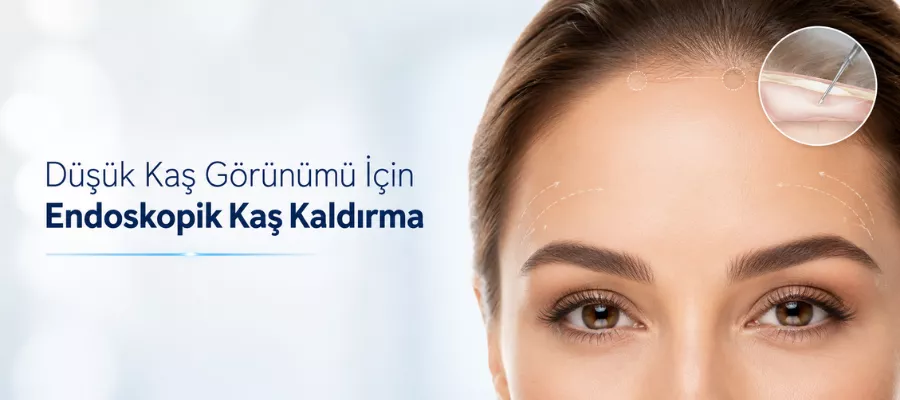
The position of the eyebrows plays an important role in shaping facial expression. As the eyebrows gradually shift downward over time, especially when drooping becomes more noticeable in the outer areas, a person may appear more tired, sad, or stern than they actually are. Endoscopic brow lift is one of the surgical methods preferred to reduce this appearance and create a more balanced expression in the upper face. Performed through small incisions made within the scalp, this technique offers an approach that involves more limited incisions compared with traditional brow lift methods.
The primary purpose of this procedure is not to raise the eyebrows as high as possible. The person’s facial proportions, eye area, forehead length, hairline, and existing eyebrow shape are evaluated together. In this way, the goal is to create a more rested, open, and natural expression rather than changing the overall character of the face.
Why Can Eyebrows Appear Lower Over Time?
The downward movement of the eyebrows is not caused solely by aging. Some people may naturally have a lower eyebrow position due to genetic factors. In addition, the skin and supporting tissues in the forehead area may become looser over time. Gravity, reduced skin elasticity, and repeated facial movements can also affect the appearance and position of the eyebrow line.
In particular, downward movement of the outer portion known as the eyebrow tail can create a more closed appearance around the eyes. This condition may also be confused with excess skin on the upper eyelid. For this reason, during the evaluation it is important to determine whether the concern originates directly from the eyebrow position, the eyelid, or a combination of both.
| Area Evaluated | Possible Change | Importance in Planning |
|---|---|---|
| Outer part of the eyebrow | Downward displacement | Affects the new position of the eyebrow tail |
| Forehead | Tissue laxity | Evaluated together with the eyebrows |
| Upper eyelid | Heavy or closed appearance | Helps determine the source of the concern |
| Hairline | High or low position | May affect incision planning |
| Facial proportions | Changes in the distance between the eyebrows and eyes | Important for achieving a natural result |
Who May Be Suitable for an Endoscopic Brow Lift?
An endoscopic brow lift is not a procedure that can be applied in the same way to every person. Surgical suitability is determined by evaluating facial anatomy and the individual’s expectations together.
- It may be considered for people with noticeable drooping, particularly in the outer parts of the eyebrows.
- It may be suitable for people whose eye area appears tired because of low eyebrow position.
- It may be evaluated for people with laxity in the forehead tissues.
- It may be preferred by people who want a more open and rested appearance around the eyes.
- It may be performed in people who are anatomically suitable for small incisions made within the scalp.
- It may be planned for people whose general health is suitable for surgery and who have realistic expectations.
Definitive suitability can only be determined after an examination by a specialist physician. In addition to the eyebrow structure, the hairline, forehead length, skin characteristics, and eyelid anatomy can also influence the surgical plan.
How Is an Endoscopic Brow Lift Performed?
The procedure is generally performed through small incisions created within the scalp. A visualization system called an endoscope helps the surgeon view the tissues in greater detail. This allows access to the tissues of the forehead and eyebrow area without creating a large incision.
The surgeon carefully releases the necessary tissues and moves the eyebrows into their planned new position. How much each part of the eyebrow is raised may vary from person to person. In some patients, providing greater support only to the outer portion may be sufficient, while in others the entire eyebrow line may need to be repositioned in a balanced manner.
After the tissues are moved into their new position, appropriate fixation methods are used. The technique selected may vary depending on the person’s anatomy and the surgeon’s surgical plan.
| Feature | Endoscopic Approach |
|---|---|
| Incision Location | Generally within the scalp |
| Visualization | With the assistance of an endoscope |
| Main Objective | To reposition the eyebrow and forehead tissues |
| Planning | Personalized |
| Scar Visibility | Intended to remain hidden within the hair |
| Result | A natural and balanced appearance is targeted |
What Are the Advantages of an Endoscopic Brow Lift?
When appropriate patient selection and surgical planning are carried out, the endoscopic approach may provide several advantages.
- Because the incisions are generally located within the scalp, the visibility of scars may be reduced.
- By improving the appearance of low eyebrows, the eye area may appear more open.
- A more controlled correction can be planned for drooping of the eyebrow tail.
- The forehead and eyebrow region can be evaluated together.
- A limited-incision approach may be used compared with traditional techniques that involve larger incisions.
- When planned according to facial anatomy, preservation of the natural eyebrow shape can be targeted.
However, these advantages do not mean that the method is suitable for everyone. In some people, different brow lift techniques or additional procedures such as eyelid surgery may be more appropriate.
Does an Endoscopic Brow Lift Look Natural?
One of the most frequently asked questions about this procedure is whether the result will look natural. Achieving a natural result depends not only on how much the eyebrows are raised, but also on the direction in which they are repositioned.
If the outer part of the eyebrow is raised excessively, a surprised expression may occur. If it is not raised enough, the expected improvement may not be achieved. For this reason, during surgical planning the existing eyebrow curve, the distance between the eyebrows and the eyes, differences between the right and left sides of the face, and forehead height are evaluated together.
The same eyebrow shape cannot be suitable for every face type. On some faces, a more horizontal eyebrow line may look natural, while on others a slightly arched shape may be more harmonious. The aim is not to change the person’s facial character but to create a more balanced version of their existing appearance.
Are an Endoscopic Brow Lift and Eyelid Surgery the Same Procedure?
A brow lift and upper eyelid surgery are not the same procedure. In brow lift surgery, the primary goal is to change the position of the forehead and eyebrow tissues. In upper eyelid surgery, the eyelid skin and, when necessary, other tissues are evaluated.
However, because the eyebrows and eyelids are anatomically close to each other, some people may experience both concerns at the same time. A low eyebrow position can make the upper eyelid appear heavier. In such cases, instead of focusing only on the eyelid, the position of the eyebrows may also need to be evaluated.
In some patients, both procedures may be included in the same surgical plan, while in others a brow lift alone may be sufficient. The most appropriate approach is determined by evaluating the upper face as a whole.
What Is the Recovery Process Like After an Endoscopic Brow Lift?
The recovery process may vary from person to person. After surgery, swelling, tenderness, and temporary bruising may occur around the forehead and eyes. The degree of these effects depends on the person’s tissue structure, the technique used, and individual healing characteristics.
During the first few days, it is important to rest with the head slightly elevated and follow the care instructions provided by the doctor. Unnecessary pressure should not be applied to the area, and strenuous physical activity should be limited for the recommended period.
In the early stage, the eyebrows may appear higher than expected. As the swelling decreases and the tissues adapt to their new position, the appearance gradually becomes more natural.
| Recovery Stage | Possible Condition |
|---|---|
| Initial period | Swelling, tenderness, bruising |
| Following period | Gradual reduction of swelling |
| Settling period | Eyebrows approaching a more natural position |
| Long term | The final result becomes easier to evaluate |
This table provides a general overview. Because every patient’s recovery process is different, the doctor’s personalized recommendations should always be followed.
Is the Effect of an Endoscopic Brow Lift Permanent?
Because the tissues are surgically repositioned, the effect of an endoscopic brow lift differs from temporary treatments. However, no aesthetic surgical procedure can completely stop the aging process. Over time, the skin and supporting tissues continue to age.
A person’s genetic characteristics, skin structure, sun exposure, lifestyle, weight changes, and smoking habits can influence long-term results. For this reason, the length of time the results are maintained is not the same for everyone.
Permanence should not be understood to mean that the eyebrows will remain in exactly the same position throughout a person’s lifetime. Surgical treatment aims to improve the current appearance, while the natural aging process continues.
Will There Be Scars After an Endoscopic Brow Lift?
As with every surgical procedure, healing tissue forms in areas where incisions are made. In the endoscopic technique, the incisions are planned within the scalp whenever possible, with the aim of reducing the visibility of scars in exposed areas.
How the scars heal depends on the person’s skin characteristics, genetic structure, and wound-healing capacity. Postoperative care may also influence this process. For this reason, it is important to follow the wound-care instructions provided by the surgeon.
If unexpected redness, tenderness, or any unusual change occurs during the healing process, the physician who performed the procedure should be contacted.
Why Is Personalized Planning Important for a Low Brow Appearance?
Low eyebrows may result from different factors even in two people whose eyebrows appear similarly positioned. Forehead length, eyebrow structure, hairline, eye shape, skin quality, and facial proportions can directly influence the surgical approach.
For example, a person whose eyebrow tail alone is low should not necessarily be treated in the same way as someone whose entire eyebrow line has shifted downward. Similarly, incision placement and the direction of tissue movement may be planned differently in people with a high hairline.
A successful result is not evaluated solely by how much the eyebrows are raised. Balance between the right and left sides, harmony with facial expressions, and preservation of the person’s natural facial character are also important. For this reason, surgical planning should be individualized for every patient.
What Should Be Considered Before an Endoscopic Brow Lift?
The preoperative period is an important part of surgical planning. The patient should fully inform the physician about medications and supplements being used, previous surgeries, existing medical conditions, and known allergies. No medication should be discontinued and no new product should be started without the doctor’s recommendation.
It is also important to discuss expectations clearly before surgery. An eyebrow shape seen on social media or on another person cannot be suitable for everyone. The goal is not to copy someone else’s appearance but to plan a result that is compatible with the individual’s own facial proportions.
A low brow appearance should not be considered only as an aesthetic detail. Since the eyebrows, forehead, and eye area are complementary regions, the procedure should be planned by taking the entire upper facial anatomy into account. With appropriate patient selection and a personalized surgical approach, a more balanced, natural, and rested facial expression can be targeted.